The advent of modern dermatology and cosmetic treatments has paved the way for a myriad of new skin rejuvenation treatments. Chemical peels and laser treatment are usually on the list, bringing many transformative changes to people’s skin tone, texture and appearance.
While both of these treatments offer targeted improvements to your skin, choosing one comes with many questions and confusion. There are several factors to consider, including methods, suitability and the results you are expecting.
The next time you are at a crossroads in choosing between chemical peel and laser treatment, this comprehensive AAYNA Clinic guide should provide you with all the relevant insights.
Understanding the Skin Rejuvenation Treatments Better
Skin rejuvenation treatments aim to repair and enhance the skin’s appearance by addressing issues like dullness, acne scars, hyperpigmentation, wrinkles, and uneven texture.
Among the many different cosmetic treatments available, especially at AAYNA Clinic, chemical peels and laser treatment have caught people’s attention quite a bit. So, let us sort out their basics.
Chemical peels
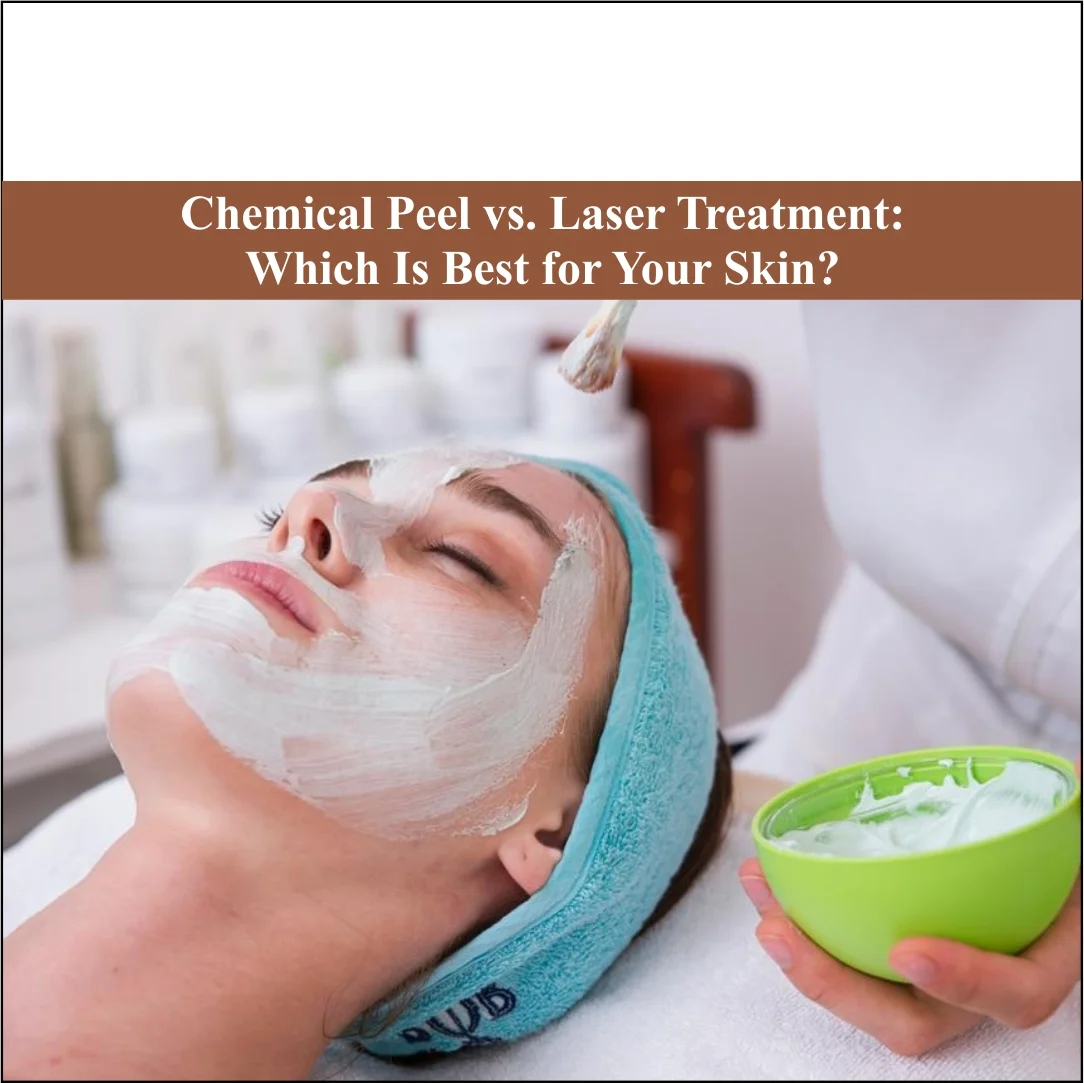
Chemical peels exfoliate the skin by applying a chemical solution that removes damaged layers, unveiling smoother and younger-looking skin. They work by encouraging new skin cell growth and stimulating collagen production.
Laser treatments
Laser treatments utilise concentrated beams of light to target specific areas of the skin. These treatments can resurface the skin, remove pigmentation, or stimulate collagen to effectively treat deep wrinkles and scars. Different types of laser treatment are targeted towards specific skin concerns.
How Do Chemical Peels Work?
Now that you have sorted the basics about chemical peels let us understand the mode of action. How do these peels work and rejuvenate your skin’s texture, tone and appearance?
Chemical peels work by exfoliating the skin using various chemical agents that penetrate different layers of the skin, depending on the peel’s depth. This process removes damaged skin cells, encourages cell turnover, and reveals a healthier, glowing complexion.
There are two primary types of chemical peels:
- Superficial Peels: These use mild acids like glycolic or salicylic acid and target the outermost layer of the skin. These chemical peels are the best choice if you have mild pigmentation issues, uneven texture or minor acne scars.
- Medium Peels: These chemical peels use trichloroacetic acid (TCA) or stronger glycolic acids and can reach up to the middle layers of the skin and exfoliate them. This kind of chemical peel is thus advised to eliminate the appearance of wrinkles, moderate pigmentation, and acne scars. Since the ingredients of the peel are stronger, the recovery from these peels usually lasts between 10-14 days.
Note: There is another category of chemical peels called “deep peels,” which either use phenol or high concentrations of TCA and are usually only recommended for extreme cases of skin rejuvenation.
Some of the benefits of chemical peels include:
- Reduce fine lines and wrinkles.
- Improve acne and superficial scars.
- Brighten skin tone and even texture.
- Customisable to target specific skin issues.
Since every individual’s skin concerns are different, there is a need for an initial consultation with a leading dermatologist at AAYNA Clinic before you proceed with the rest of the treatment.
How Do Laser Treatments Work?
Laser treatments leverage advanced technology to address skin issues at various depths by targeting specific skin cells without affecting surrounding tissues. Based on their action mechanism, these treatments are categorized into ablative and non-ablative lasers.
Depending on your skin’s needs, different laser treatments available at AAYNA Clinic will address the underlying concerns and offer the desired results.
- Laser Genesis: Also known as photo facials, laser genesis is one of the most effective skin rejuvenation treatments using a laser. It exfoliates the outermost layer of the skin with minimal redness and leaves you with glowing and healthy skin. The treatment works by creating a microscopic laser column on the skin, penetrating deeper and treating the damaged skin only.
- FRAXEL: While primarily known for treating stretch marks, FRAXEL is equally effective in treating acne scars, a common concern among many. This laser treatment eliminates unwanted pigmentation, ensuring you have even-toned skin. The laser targets the damaged skin and leaves minimal redness, which remedies itself within the first week after the treatment.
Some of the benefits of laser treatment for skin resurfacing include:
- Precise targeting of problem areas.
- Suitable for deep skin concerns, including scars and wrinkles.
- Long-lasting results with minimal sessions.
- It can resurface, tighten, and brighten the skin.
Key Differences Between Chemical Peels and Laser Treatments
The following table should provide you with all the relevant insights for a more visible comparison between chemical face peel and laser treatments for skin rejuvenation.
| Aspect | Chemical Peels | Laser Treatment |
| Mechanism | Exfoliates with chemicals | Uses focused light energy |
| Best for | Surface-level skin concerns | Deep scars and pigmentation |
| Suitability | Safe for most skin types | Requires caution with darker skin. |
| Downtime | Depends on the type of peel, usually between 4-14 days. | Minimal to weeks, depending on the laser treatment |
| Cost | Affordable: ₹2,000–₹10,000/session. | Expensive: ₹5,000–₹50,000/session. |
Depending on your skin concern and budget and discussions with the dermatologist during the initial consultation, you should be able to figure out the best option for your skin.
Which Treatment Is Better for Specific Skin Concerns?
With the advancements in modern cosmetic treatments, selecting the ideal treatment that would rejuvenate your skin from within has become extremely confusing.
To make the choice easier, we will pick out common skin concerns and then align the best treatment between chemical peel and laser.
1. Acne and Acne Scars
Regarding skin concerns, acne and acne scars are the most prevalent complications most individuals struggle with. So, between chemical peels and laser treatment, the choice becomes a lot more confusing.
Salicylic acid peels are excellent for active acne, reducing inflammation, and preventing breakouts. They also help with mild scars.
While chemical peels are great for treating and eliminating active acne, laser treatments like FRAXEL are excellent for removing acne scarring. So, you need a combination of both to eliminate acne and the scarring it leaves behind.
Winner: Peels for active acne; lasers for severe scarring.
2. Hyperpigmentation and Melasma
If you are struggling with hyperpigmentation or melasma, chances are that you are dealing with issues like uneven skin tone and visible dark spots.
Chemical peels effectively target superficial discolouration and melasma safely, especially with glycolic or mandelic acid. On the other hand, laser treatments are usually effective for treating certain levels of pigmentation on the skin, but they don’t always yield favourable results for melasma.
Winner: Peels are generally safer for melasma, but lasers work for stubborn pigmentation.
3. Wrinkles and Fine Lines
Tired of the visible fine lines and wrinkles on your skin? While ageing is a common part of life, not many want to bear its visible symptoms on our skin.
Among chemical and laser treatments, medium peels effectively treat complaints of fine lines and wrinkles and refresh the skin. If you have deep wrinkles, ablative laser treatments are a great way to overcome the issues.
Winner: Lasers, for their deeper collagen-stimulating effects.
4. Uneven Skin Texture
The prevalence of uneven skin texture can result from several factors, including acne, open pores, dead and dry skin cells, etc.
Opting for skin resurfacing treatments thus becomes a prevalent need to fix the issues for good. Chemical peels are great for targeting the dead skin cells on the skin and promoting regeneration.
However, if you want a much smoother skin texture and appearance, ablative laser surfacing treatments are great for improving the skin’s texture.
Winner: Lasers for severe textural issues and chemical peels for minor textural improvements.
5. Sun Damage
One of the most common skin issues people deal with is sun damage. It can be caused by unprotected skin exposure to the harsh UV rays of the sunlight. Sun damage is usually characterised by redness, uneven skin tone or discolouration on the skin.
Opting for light or medium chemical peel for hyperpigmentation can effectively target the sun damage and the uneven skin tone concerns that you are likely dealing with.
If you have extensive sun damage with visible sun damage spots and other issues, fractional lasers are an effective option for addressing those concerns.
Winner: Lasers for deeper and extensive sun damage but chemical peels are equally effective in addressing the common sun damage concerns on the skin.
Recovery and Downtime: Chemical Peels vs Laser Treatment
One of the major aspects of determining between chemical peels and laser treatment is paying close attention to the recovery and downtime.
Chemical peels usually recover between 3-14 days, depending on the peel you are getting. For example, if you get superficial peels, recovery is around 3-5 days. On the other hand, medium peels can involve up to 10-14 days of recovery.
Laser treatments also have varying recovery times, especially depending on the kind of treatment you are getting. On average, you can expect the minimal redness and slight discomfort from the treatment to last between 1-2 weeks (sometimes less).
The key to optimal recovery from either of these cosmetic treatments is to adhere to the dermatologist’s aftercare instructions. Protecting your rejuvenated skin is crucial.
Cost Comparison: Chemical Peels vs. Laser Treatment
Another common factor influencing people’s decision to choose between the best chemical peel and laser treatment for skin rejuvenation is the cost they’d have to bear.
Chemical peels are usually more affordable and range between ₹2,000 and ₹10,000 per session in India. On the flip side, laser treatments are slightly more expensive and can cost between ₹5,000 and ₹50,000 per session.
Which Treatment Should You Choose?
Between the two – chemical peels and laser treatment, the one ideal for your skin will depend on multiple factors, including:
- Your Skin Concern: Choose peels for surface-level issues like dullness and mild pigmentation. Opt for lasers for deep scars or wrinkles.
- Skin Tone: Chemical peels are safer for darker skin tones, while lasers require expert handling to avoid pigmentation risks.
- Budget: Peels are cost-effective, while lasers are a higher investment for long-term results.
The key is to schedule your consultation with the best dermatologist in Delhi at AAYNA Clinic, get a thorough skin assessment and then get a personalised treatment plan based on your skin’s needs.
Book Your Consultation Today!
Irrespective of whether you choose chemical peels or laser treatments, AAYNA Clinic offers the absolute best cosmetic treatments with the help of experienced dermatologists. From the initial consultation to the treatment, we will guide you every step of the way with 100% transparency and open communication.
Visit AAYNA Clinic to schedule your consultation today and take the first step towards a rejuvenated skin!