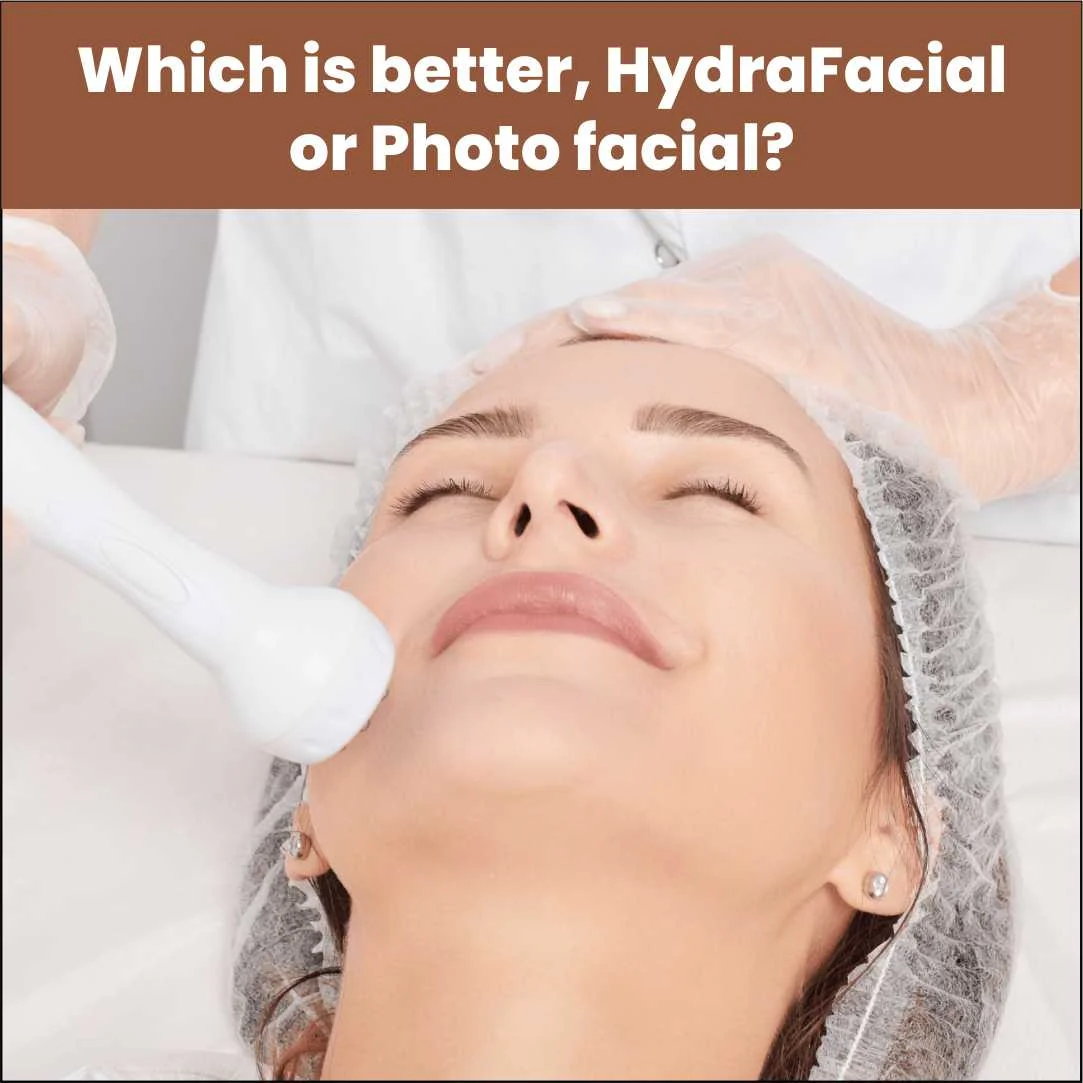
Have you ever given a thought about how you can get a fresh look on your face? Photo Facial and HydraFacial, the two stalwarts of facial treatment have taken the aesthetic world by storm due to their transformative effect.
They both profess treatments that would give an even, glowing and young skin but suit different demands and wants of customers. Having to choose between a photo facial and a hydrafacial means you need to know what both options have to offer. This comparison is not only done to make you understand their utility but also to help you choose the benefit that is best suited for your skin type.
Comparing Hydrafacial With Photofacial
-
Target Areas
Photofacials excel in treating pigmentation concerns such as sun damage, sun spots or freckles. They employ light technology to work through the skin layer. They help in dermal pigmentations for clearer skin complexion as a result of breaking down of the pigmentations.
In contrast, Hydrafacials include the process of hydrating and washing the skin. They incorporate scrubbing, cleansing and moisturizing to help in skin renewal. This treatment makes the skin more elastic and also shinier.
-
Experience Of Treatment
Laser photo rejuvenation is a therapy system for skin improvement. The patient may feel uncomfortable at some point during the procedure. But the end effect is worth the effort because it gets rid of most of the pimple-like marks.
Hydrafacials are more relaxing. It is like getting a mild spa treatment that does not only clean you but also provides nutrients to your skin. Most report this process as very refreshing with very little aggravation involved.
-
Suitability
This treatment is particularly useful for people with lighter skin because photo facials are centred around pigmentation. People with particularly dark skin might develop patches of dark skin after this treatment.
Hydrafacials can be applied to all skin types and skin problems due to the mild impact they have on the skin. Whether your skin type is sensitive or you have acne-prone skin, this facial can be adapted to suit your skin without causing any inflammation.
Hydrafacial and Photofacial – Comparison Table
The table below shows the comparison between Hydrafacial and Photofacial according to different elements –
| Elements | Hydrafacial | Photofacial |
| Focus | Cleanses exfoliates, hydrates, and enhances the overall skin tone | Improves skin texture and reduces the appearance of acne, redness, pigmentation, and sun damage spots |
| Targeted Skin Concerns | Fine lines, dullness, dryness, and congestion | Acne scars, rosacea, freckles, and age spots |
| Number of Sessions | A single session usually works | Multiple sessions are required to get the desired results |
| Suited skin types | Suits almost all skin types | Suits almost all skin types, but doctor consultation is recommended |
| Ingredients and Technologies | Serums, suctions, and vortex technology | Intense Pulsed Light (IPL) |
| Pain involved | Usually comfortable with no pain involved | May cause a little pain and tingling sensation |
| Results | Instant glow, hydrated skin, and enhanced texture | Increased collagen production and slowly reduced appearance of redness and pigmentation |
| Downtime | No to minimum downtime | Minimum downtime with mild swelling or redness |
| Cost | Depends on the clinic location and the doctor’s expertise | Depends on the clinic location, the doctor’s expertise, and the number of sessions |
| Customization | Can be customized and is flexible | Can be customized depending on your skin condition |
How To Choose Between Hydrafacial And Photofacial
-
Skin Issues
It is important to evaluate your skin problems and aspirations. Photofacials help with problems such as sun damage, rosacea, or hyper-pigmentation because they stimulate the production of collagen. It employs light and achieves penetration into the second and third layers of the skin.
HydraFacials are, however, categorized under skin cleansing, skin exfoliating, and skin hydrating procedures. This is the most suitable for those who want to enhance their skin quality, through texture, moisture and such, without surgery.
-
Professional Advice
It is advisable to consult professionals who deal with skin-related issues extensively, such as AAYNA aestheticians. They can study your skin type and state to indicate the most adequate treatment. Though photofacials are useful in treating skin problems such as pigmentation and collagen synthesis, HydraFacials may be most suitable for sensitive skins who would require a mild glowing skin boost.
-
Recovery Time
Think about recovery time and about the possible downtime of the procedures as well. The photo facial may take several days for the face to return to normal since there is slight redness or swelling as the skin heals. The HydraFacial MD treatments generally come with no side effects and clients can resume their normal activities afterwards.
Aftercare And Downtime Management
-
Photofacial Care
After having chosen between photofacial and hydrafacial, minimizing downtime becomes essential. During photofacial treatments, it is recommended that the patient should not expose themselves to sunlight directly in the initial days after the procedure.
This is because it assists in avoiding skin injury or inflammation that might be caused by the treatment.
A broad-spectrum sunscreen and applying non-aggressive skincare products should be used to help heal the skin naturally. Another measure for a smooth recovery is to ensure that the treated area is not exposed to hot water and is kept cool and calm.
When it comes to photo-facial clients, the pain is usually minimal. However, it is possible to call experienced professionals to get a consultation and feel calm. They can also give advice based on the skin type and what you need to do about it.
-
Hydrafacial Routine
HydraFacial post-care involves steps meant to sustain the outcome of the treatment. Everyone should have a skin care regimen of washing, moisturizing and protecting the skin from UV radiation. Investing in products recommended by your skincare expert means you benefit from the best hydrafacial results.
One thing that patients hardly ever express their concern is about the downtime or recovery woes with hydrafacials since they are so gentle. However, it is necessary to follow aftercare instructions appropriately to get the best outcome.
Risk Comparison: HydraFacial vs. Photofacial
HydraFacial and Photofacial are both safe procedures but the risk involved depends on how it is done: HydraFacial uses a different mechanism than Photofacial. Here’s a comparison –
| Aspect | HydraFacial Risks | Photofacial Risks |
| Skin Sensitivity | Mild redness or sensitivity, usually resolves quickly. | Temporary redness, swelling, or peeling, particularly for sensitive skin or darker tones. |
| Pigmentation Changes | Rarely causes pigmentation issues. | Slight risk of hyperpigmentation or hypopigmentation if aftercare isn’t followed. |
| Heat Sensitivity | No heat involved, making it gentle on the skin. | May cause discomfort or slight burns due to the heat from IPL. |
| Suitability | Safe for all skin types, including sensitive skin. | Not suitable for very dark skin tones or those with active skin conditions. |
| Allergic Reactions | Rare chance of reacting to serums used during treatment. | No allergies to light but reactions may occur with post-treatment products. |
This table shows that HydraFacial is less invasive with little side effects, while Photofacial should be used with caution if a patient has the following skin type or skin conditions.
So Which One Should You Choose?
The choice between a photofacial and a hydrafacial simply comes down to understanding your skin and precisely what you want. Hydrafacial Face Treatment is suitable for anyone who wants an intensive facial cleaning process while photofacial Face Treatment can be used to correct skin issues that are specific to an individual.
Your choice should therefore be informed by your issues. Say if you need to treat sun damage or if you need to hydrate your skin. Again, the best is the one that is compatible with your lifestyle, skin type and the aesthetic objectives you wish to avail of.
It is now the time to do something for your skin! See your dermatologist or skincare expert to get proper recommendations suited to your case. Welcome the process of getting glowing and healthy skin by making a choice of the particular treatment that is appealing to you. That’s why your skin needs no further invitation to be pampered. Start searching for the options you can take today.
Conclusion
At AAYNA clinic, we know that every skin is different and requires professional treatment and care. No matter whether you want a photo facial to focus on a specific area or HydraFacial to give your skin the nourishment it deserves, our specialists are with you.
We can assist you to decide the kind of treatment best suited for your skin’s needs and desires. Come to AAYNA to witness the ideal skincare solution that makes your skin glowing and healthy. Come, experience the AAYNA magic!
FAQs
-
What is the nature of the difference between a Photofacial and a HydraFacial?
Photofacials involve the use of IPL to address skin discolouration concerns whereas HydraFacials aim at nourishing, washing and peeling the skin to make it beautiful.
-
What is the average duration of each of the facial treatments performed?
A Photofacial session may take approximately 30 minutes while HydraFacial treatment might only take 45 minutes at most.
-
Is it possible for me to go back to work as soon as either treatment is administered?
Yes, the Photofacial and HydraFacial treatments are said to have virtually no downtime at all. The majority of the clients go back to what they were doing before immediately.
-
What facial treatment is more effective for the treatment of acne scars?
HydraFacial is largely more efficient when it comes to treating acne scars because it helps to gently cleanse and peel the skin as a way of minimizing scarring.
-
Which one is better for sensitive skin – Photofacials or HydraFacials?
HydraFacials can be preferred as effective on sensitive skin since the process of cleaning and moisturizing differs from Photofacials which use light.
-
For the best result, when should I go for these facials?
It is recommended that Photofacials be done on a 3-4 weekly basis, while HydraFacial treatments are done on a monthly basis for the best result.